Pan · Tilt
Two-axis active stabilization
Pan and tilt correct together, holding the line of sight where the operator pointed it.
AMAS Vision · Marine EO/IR Gimbals
The hull moves. The picture holds.
AMAS Vision designs stabilized thermal and visible camera gimbals for unmanned surface vessels and other unmanned platforms. While the platform pitches and rolls in a seaway, the line of sight stays on target, and every function is operated remotely from shore or a mother ship.
Stabilization
Pitch and yaw at Sea State 5–6 are cancelled by the gimbal in real time. The bearing and elevation the operator locks stay put while the hull rises and falls.
Pan · Tilt
Pan and tilt correct together, holding the line of sight where the operator pointed it.
Feed-forward
The gimbal takes in the hull's attitude and compensates before the motion reaches the picture, instead of waiting for the image to drift.
Soft limits
When a large wave pushes an axis toward the end of its travel, correction eases off smoothly instead of hitting the stop and jolting the picture.
AMAS Miro18
AMAS Miro18 TV10L is our two-axis stabilized marine gimbal. Thermal, wide-angle, zoom and a laser rangefinder work together in one unit, taking the operator from wide-area search to target identification and location.
Search · Identify · Locate
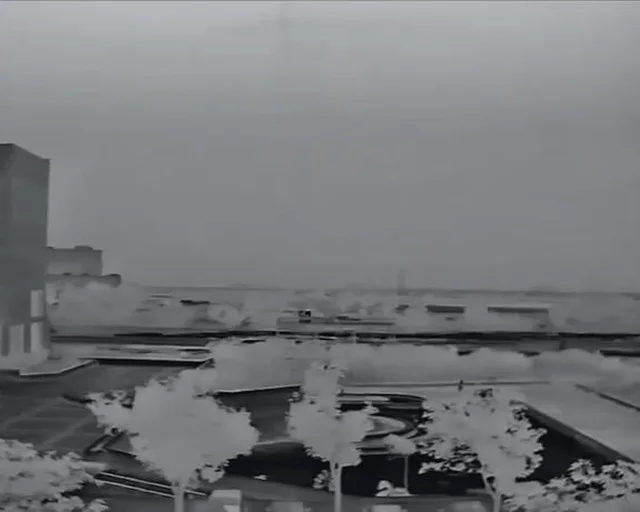
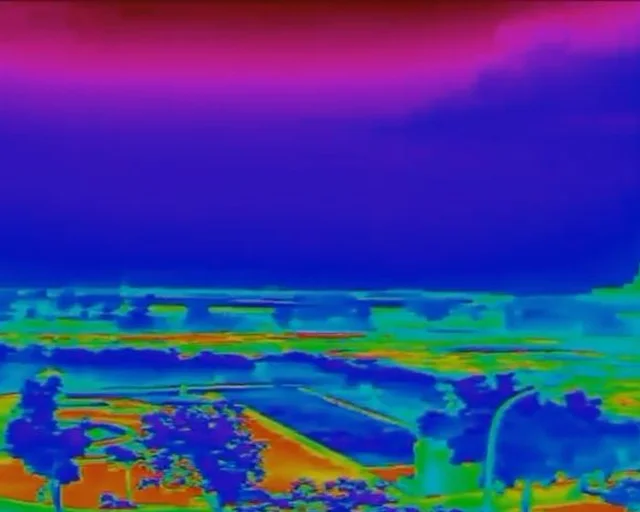
Thermal, 48 MP wide-angle, 10× optical zoom and a laser rangefinder in one module: search, identify and locate with a single payload.
Built for Sea Service
Salt spray, humidity, sun and constant vibration are the daily conditions on a working vessel. AMAS Miro18 is built to keep working in them.
Uptime
When service is needed, the vessel returns to its mission in short order. Less downtime for the gimbal means more time on patrol.
Designed in Taiwan
Mechanics, control electronics and software are developed by AMAS in Taiwan, with direct technical support from the team that built it.
Faceted housing
A compact, rigid faceted shell that stands up to life on deck and sits cleanly on any mast.
Marine electronics
AMAS designs its own control boards for life on board: humidity, salt, vibration and electromagnetic interference.
Open Integration
Select the gimbal model in CORUM Pilot and its dedicated control panel and on-screen information load automatically. An open architecture also lets it join other unmanned systems and third-party ground control stations.
About CORUM Pilot↗Up, down, left and right keys drive pan and tilt directly.
The video shows model, resolution and field of view, plus live azimuth and elevation.
Gimbal pointing angles, laser range and vessel position mark the target on the map.
Standard interfaces, including MAVLink, connect it to other unmanned systems and MAVLink-based ground control stations, not only CORUM Pilot.
Gimbal control and imaging control are separate, so changing the sensor module does not affect handling.
Specifications
Specifications may change as development continues. The datasheet is the reference for final figures.
Request the datasheet→Contact
For distribution, integration trials or the datasheet, write or call us.